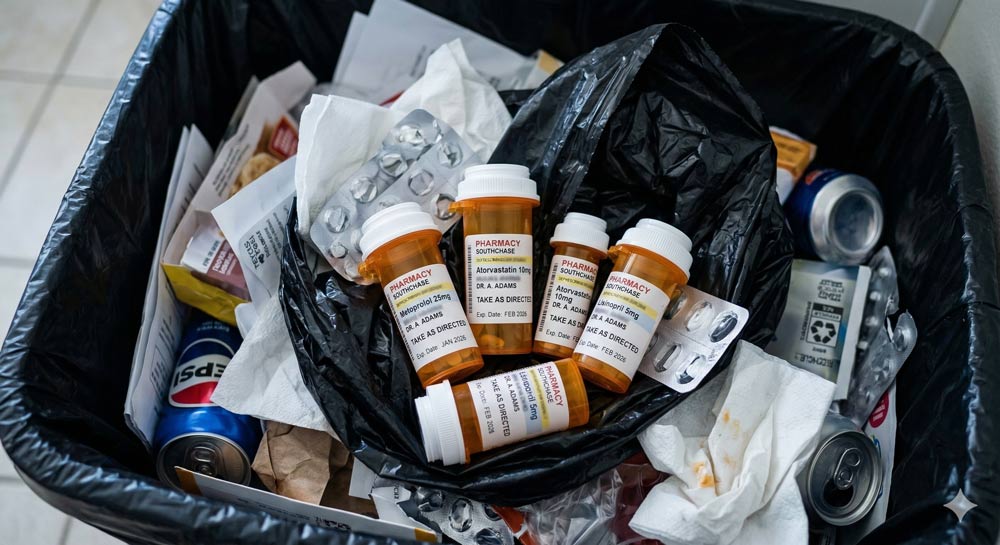
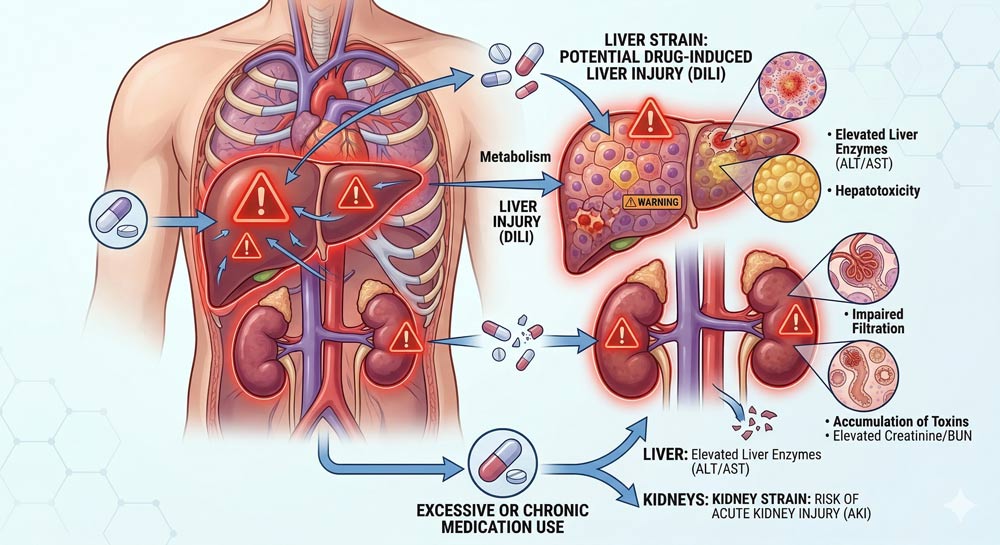
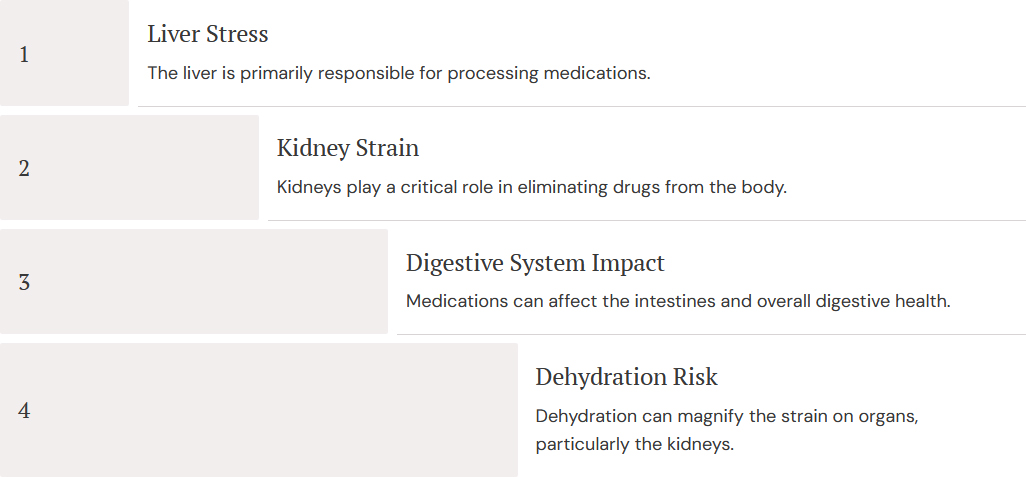
When you take pharmaceutical drugs, your body relies on a highly efficient detox system to process and eliminate them. This detoxification primarily involves the liver, but the kidneys and intestines also play critical roles in keeping your system clean. Over time, however, medications can place significant stress on these organs, particularly if your diet or hydration levels are poor.
In fact, dehydration, one of the most common yet overlooked issues for those on medications, can magnify the strain on the kidneys, potentially leading to long-term damage.
Similarly, a diet high in processed foods, sugars, or alcohol adds further stress to your liver, impairing its ability to break down and eliminate drugs efficiently.
Over-reliance on medications can silently cause problems like liver toxicity, reduced kidney function, or digestive issues that may only surface after significant damage has been done.
By supporting your body’s natural detox pathways—through proper hydration, nutrition, and smart medication management—you can help reduce the burden on these vital organs and maintain your long-term health.
How understanding truth #5 improves your life
Understanding that medications can strain your liver and kidneys empowers you to make healthier choices. For example, staying well-hydrated with 8–10 glasses of water daily supports kidney function, while detox-friendly drinks like green tea or lemon water assist your liver.
Incorporating nutrient-rich foods like turmeric (for its anti-inflammatory properties), nuts (high in antioxidants), and fish (rich in omega-3 fatty acids) further supports liver health.
However, individuals on blood thinners like warfarin should consult their doctor before increasing their intake of leafy greens, as their high vitamin K content can interfere with medication. Additionally, avoiding grapefruit and similar foods that alter drug metabolism can help minimize side effects and improve medication efficacy.
Regular health check-ups, including organ function tests, and the use of natural remedies for minor ailments where appropriate can further reduce the burden on your liver and kidneys. These proactive steps not only protect your organs but also ensure your treatment plan supports your long-term health goals.